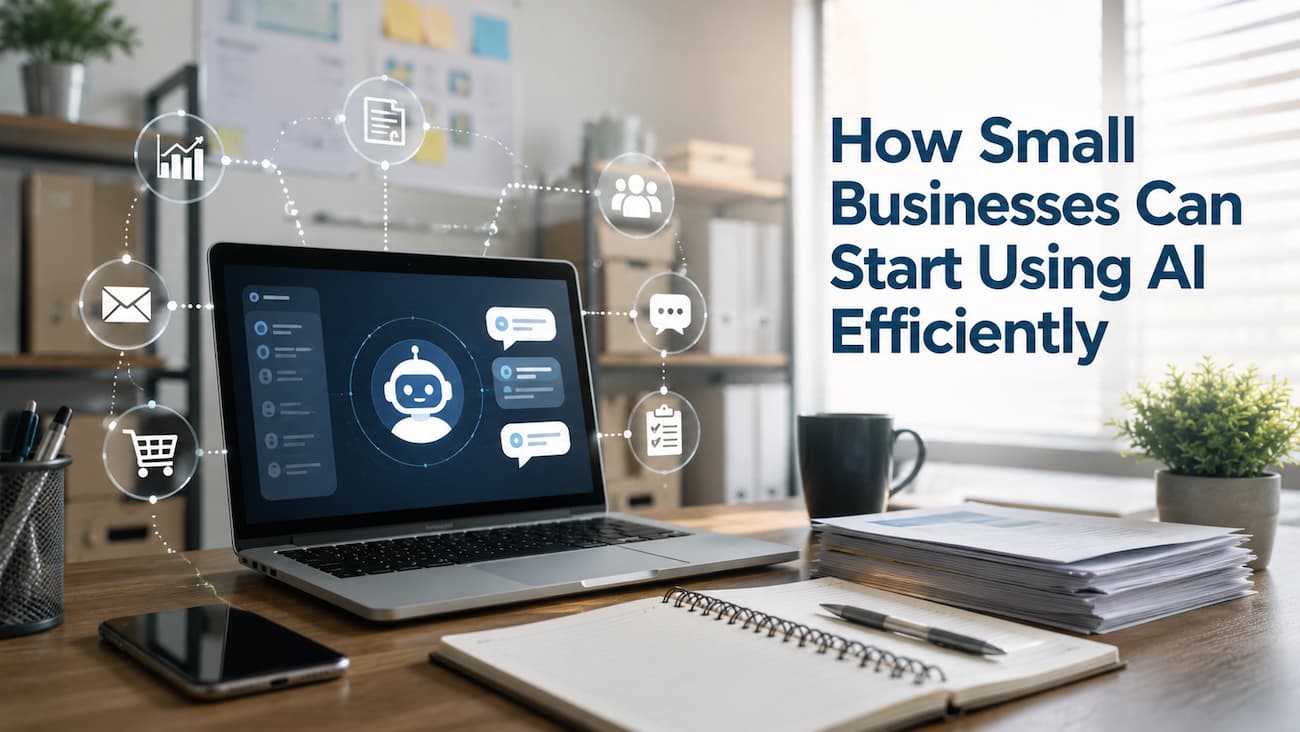
Although AI is useful, it is often not the best starting point for problem-solving. You cannot expect productivity to suddenly increase after implementing an AI chatbot or automation platform. The real value lies in identifying repetitive tasks, choosing the right tools, and applying AI in a structured way to save time without creating new problems. For small businesses, the ideal starting point is often to start small. Each week, identify time-consuming processes, improve them, and measure the results before considering scaling up. This approach simplifies AI management and shows entrepreneurs the most effective use of the technology.
Start With the Problem, Not the AI Tool
Subscribing to an AI service before you know how to use it is a common mistake. Thinking backward often yields greater benefits for small businesses. Analyze your current workflows and identify anything that is tedious, repetitive, predictable, or involves unnecessary manual work. For example, a company might spend a lot of time each week answering virtually the same questions. Someone might have to summarize meeting minutes or update email templates multiple times. Local service providers might be wasting too much time processing appointment requests, while an online store needs help writing the initial product descriptions. Because these processes already exist, they offer opportunities. Entrepreneurs can determine if AI can help streamline certain workflows by examining which steps are a waste of time. Trying to “use AI in every step” does not work. The goal should be to maintain the quality customers expect while simultaneously eliminating unnecessary work in specific tasks.
Choose One Simple Workflow to Test
Small businesses often lack the space or time to experiment with new things. Therefore, instead of attempting to overhaul an AI system completely all at once, it is better to start with a small-scale pilot project. It is best to choose an important process that is measurable and will not have a devastating impact on the business. Drafting initials, compiling internal memos, writing daily emails, organizing information, or brainstorming content are all good starting points. Capture the current status of the task. When will the task be completed? Who is responsible? What data is required? What will the end result be? Once these questions are answered, AI is integrated into the process, and the results are compared and evaluated against existing methods. The end result serves as a practical starting point. With AI-supported workflows, tasks that would normally take two hours can be completed in thirty minutes without loss of quality—a significant advantage for businesses. Even if the amount of corrections required by the AI output makes the time savings insignificant, the experiment still yields useful information.
Automating Routine Tasks and Concepts with AI
For startups and small businesses, one of the best applications of AI is generating prototypes that are reviewed by humans. This approach saves time and involves employees more than starting from scratch. AI tools can manage meeting minutes, generate questions for sales calls, streamline lengthy internal documents, or convert initial ideas into basic concepts. It can also draft initial emails for clients. Employees can then refine the final product through feedback. In many cases, this approach is more effective than relying entirely on AI to perform tasks autonomously. Machines can speed up repetitive tasks, but employees remain responsible for accuracy, tone, and the final judgment. A typical example of the use of AI in small businesses is converting disorganized meeting minutes into clear, concise summaries. Consultants meticulously check names, dates, appointments, and technical specifications before sending documents to clients. AI does not intervene in finalizing the terms but saves time on organizing and formatting.
Improve Customer Support Without Losing the Human Touch
When customers repeatedly ask the same questions, artificial intelligence (AI) can help small businesses improve their customer service. AI can streamline information retrieval, collect frequently asked questions, and automatically generate answers. Opening hours, return policies, delivery terms, service content, and commonly used troubleshooting methods can all be accurately captured in the company’s central knowledge base. To better respond to customer needs, AI systems can recommend resources or collect relevant data. Crucially, the underlying data must be current and accurate. It is unacceptable to let AI determine rules or make promises that the company cannot keep. For more complex complaints, human intervention remains necessary. Automated responses lack the empathy and judgement that customers need in billing disputes, complex issues, or sensitive situations. In these cases, AI is most effective as a supporting layer. Employees can respond faster with the help of AI, while humans can continue to create meaningful customer interactions.
Optimizing Your Marketing Strategy
For small businesses, marketing can be very time-consuming. Marketing campaigns, content ideas, press releases, and posts across various platforms can quickly become exhausting to plan, brainstorm, write, and coordinate. While AI can assist with brainstorming and writing copy, companies should not publish all content without approval. Generic, AI-generated content often fails to reflect the unique expertise of small businesses. An improved process involves providing AI with relevant information, such as the target audience, the services offered, and the company’s preferred communication methods. A customer-facing editor then reviews the final product. For example, a technician at a local repair shop could create an AI-generated manual based on a brief description of a typical household problem. By evaluating the technical information and adding practical suggestions based on the customer’s actual issues, the technician or business owner can improve the service. This approach combines the company’s actual knowledge with AI’s ability to organize and write information. The end product is far superior to generic content lacking its experience.
Ensure Processes Work Well Before Automation
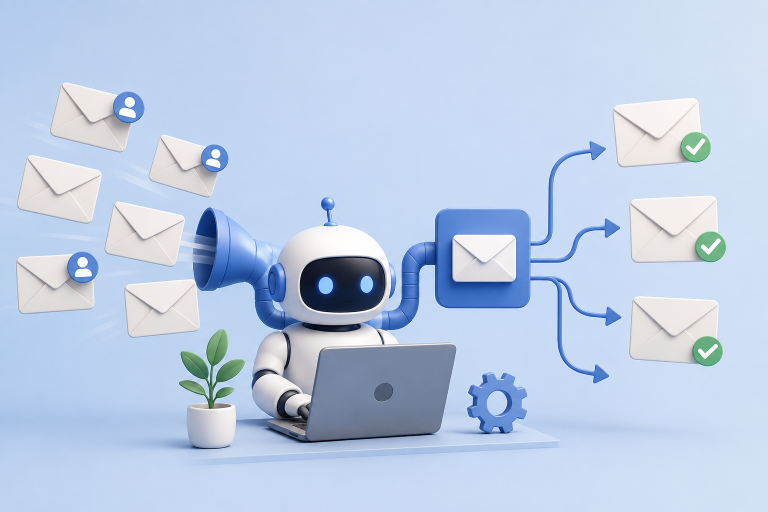
Automation can significantly expand the capabilities of AI, but flawed processes will only introduce more errors. Before integrating AI with other systems, you must always verify that the underlying processes are reliable and easy to understand. Imagine a company that receives emails with questions from potential customers. Before the process is automated, company executives must be familiar with the question classification system, which questions require human intervention, and which information must be reviewed before an answer can be provided. Once the processes are reliable, it becomes crucial to automate routine tasks such as sorting emails, extracting basic information, writing replies, or notifying relevant personnel. For actions with potentially far-reaching consequences, human approval must be retained. Refunds, updating customer data, and legally binding agreements are fundamentally different from sending standard internal notifications. The more authority an automated workflow is granted, the more careful its testing and monitoring must be.
Ensuring the Security of Customer and Business Data
Neglecting data processing in the name of efficiency is unacceptable. In small businesses, personal data, banking details, customer correspondence, and confidential business documents are commonplace. This data must not be automatically sent to all AI services. Before applying AI to sensitive data, you must ensure that you understand how the service handles user privacy and that you adhere to company policy. Never enter sensitive information such as passwords, credit card numbers, verification codes, or other sensitive login credentials into AI systems; instead, delete all unnecessary personal information. Employees must also have insight into the AI services authorized by the company. Clear policies detailing permitted data usage, available tools, and situations requiring human approval help prevent misunderstandings. Security programs are therefore an integral part of effective AI use. Data processing, access rights, and error responses in AI-supported workflows must be transparent to the company.
Training Employees in the Use of AI
Purchasing AI software is simple, but teaching employees how to use it correctly is far more valuable. Clear communication, verifying AI-generated data, identifying errors, and protecting sensitive information are skills employees must master. They must understand when AI is not the best option. Sometimes, a short internal manual is sufficient to clarify the basic rules. The guidelines can describe procedures for reporting anomalous AI behavior, permitted tools, strictly prohibited input data, actions requiring human authorization, and more detailed information. Training should encourage employees to take risks in a controlled environment. Employees who understand the capabilities and limitations of the technology are more likely to find practical applications and avoid dangerous situations. The goal of the training is not to turn every employee into an AI expert, but to teach them to make informed decisions regarding the proper use of AI in the workplace.
Assessing the Success of AI
The implementation of AI must be based on results, not on enthusiasm. Even if a company has the best technology in the world, efficiency will decrease if employees spend more time resolving automation errors than actually completing the work. Closely monitor measurable results, including completed work, customer satisfaction, response time, error rate, and time savings. The processes that need improvement determine the appropriate metrics. Imagine that AI-supported processes halve the weekly reporting time. It would benefit the company enormously if employees could spend more time analyzing data instead of formatting it. If reports are more prone to errors and require further validation, the process may need to be revised. Monitor the results closely. Due to the rapid development of AI tools, processes that work well today may be even better tomorrow. The same applies to workflows: what works in a pilot project may not be the best option for sustainable business operations.
Plan your AI Initiatives Gradually
Once a small business has improved one process, it can move on to the next improvement opportunity. But do not rush. Every new application requires responsible, human oversight and clear objectives. A company can eventually accumulate a series of AI-driven processes covering various aspects of internal business operations, customer service, R&D, marketing, and administration. These systems do not need to be overly complex. A large number of unrelated tools often does not deliver the same value as a few well-planned improvements. The most effective strategy is to integrate AI into the core of the business, rather than viewing it as a fleeting trend. For every application, the first three questions to consider are: “What problem does it solve?”, “How do we know that it works?”, and “Who is responsible for the results?” With this mindset, we can closely link technology to business goals. Employees are more likely to embrace new tools if they understand their purpose.
Conclusion
Small businesses do not need to invest heavily in technology or develop complex AI plans to benefit from AI. If you want to launch an AI project quickly, it is best to start by solving a simple problem that is both time-consuming and easy to automate. Choose a concrete task, test the AI on a small scale, evaluate the results, and quantify the changes. Use AI to draft, organize, summarize, and execute repetitive tasks, while ensuring human responsibility for accuracy and important decisions. Ensure the security of customer data, provide employees with adequate training, and automate processes only once they are stable. Companies that implement the most AI tools will likely not benefit the most from this technology. The most valuable companies are those that deploy technology strategically, integrate it with their actual operational needs, and continuously improve human-machine collaboration.
FAQs
1. What is the best way for startups or small businesses to implement AI?
First of all, focus on a routine, low-risk task that you perform regularly. Writing daily correspondence, organizing notes, generating new ideas, and processing data are good examples. Compare the time and quality before and after the implementation of AI.
2. Should small businesses automate every possible task?
No, automation should be used carefully. Tasks involving sensitive decisions, unexpected customer situations, financial consequences, or significant business liability may require human assessment or control.
3. Can small businesses replace people with artificial intelligence?
In general, artificial intelligence is better suited to improving productivity than to completely replacing people. By eliminating repetitive tasks, it can free up employees’ time and energy, allowing them to focus on tasks that require their knowledge, creativity, judgment, and interpersonal skills.
4. How can companies ensure the security of sensitive data when using artificial intelligence?
Implement transparent internal processes, use approved tools, understand privacy guidelines, and limit unnecessary data sharing. Do not enter sensitive login credentials or confidential information into AI systems unless you have implemented appropriate authorization and security measures.
5. How do you evaluate the value of AI workflows?
Evaluate the practical effects. To evaluate the AI-generated work output, you must take the following factors into account: time savings, quality, error rate, customer experience, and required input. If the workflow demonstrably improves results without entailing unacceptable risks, it may be worthwhile to scale it up.

Samira Patel is a tech writer who believes the best tools are the ones you actually use. She tests every app, shortcut, and workflow on her own laptop before sharing it—no recommendations she hasn’t lived with herself. When she’s not figuring out why a computer is running slow, she’s probably reorganizing her cloud storage (again). She writes to help busy people find simpler, smarter ways to work. No hype, just what works.