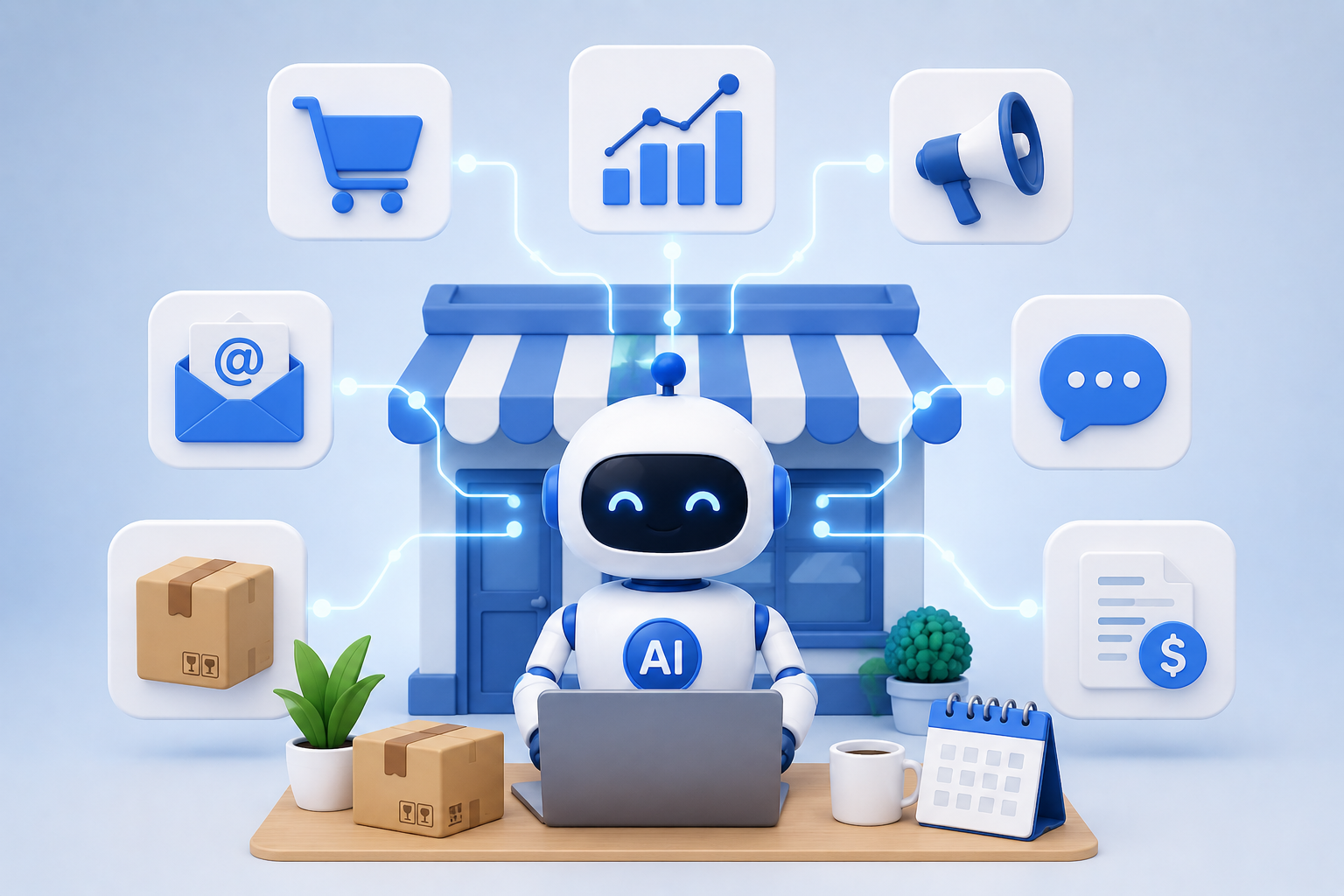
Small company owners take on many roles. One day you answer consumer emails; the next you update inventory, post on social media, or prepare invoices. These everyday duties are vital yet time-consuming. This area is where AI automation for small businesses can shine. Artificial intelligence is no longer a technology reserved for large corporations with giant budgets. AI-powered technologies may automate monotonous tasks, boost productivity, and let small businesses focus on customer service and growth. Understanding AI automation and its role in daily operations may help company leaders make better decisions and streamline services.
Understanding Small Business AI Automation
AI automation involves using AI to execute human work. Traditional automation follows rules, but AI can examine data, spot trends, and make basic judgments. Small companies can execute numerous daily tasks faster and with fewer manual processes. You can automate booking appointments, processing emails, answering typical client inquiries, and managing corporate data. The idea is to eliminate time-consuming repetitive tasks, not replace humans. When business owners spend less time on administrative tasks, they can focus on client interactions, product innovation, and long-term planning. AI automation runs silently in the background to improve consistency, reduce human error, and streamline processes.
Why Small Businesses Are Using AI Automation
Small firms frequently lack manpower and resources. Production may increase with every hour spared. This issue is a major reason AI automation is growing. Many business owners overburden themselves with non-growth-related responsibilities. AI can handle many of these tasks, freeing up workers for higher-value labor. Improved precision is another benefit. Manual data input, scheduling, and communication can be error-prone. Automated systems eliminate mistakes and preserve workflow. Businesses may use AI automation to handle customer interactions, process requests, and monitor activity after hours. As technology becomes more inexpensive and accessible, even small enterprises may use capabilities traditionally reserved for bigger organizations. This accessibility makes AI automation a viable option for many sectors.
Automating Customer Service and Communication
Customer communication is crucial to corporate success. Customers expect prompt and trustworthy support when they have inquiries. AI automation can help firms satisfy these requirements without manual intervention. Many companies utilize AI-powered chat platforms to answer simple queries and send clients to the relevant resources. Customers can obtain rapid confirmation of their email requests via automated email answers. AI can categorize incoming messages, prioritize critical requests, and route them to the right team members. Businesses may improve customer service and response times with these features. Employees can then address more difficult cases that demand special attention. AI automation improves communication efficiency, helping organizations gain consumer trust.
Streamlining Office and Administrative Tasks
Administrative labor is necessary, yet it takes up much of a business owner’s time. Booking meetings, maintaining calendars, organizing papers, and completing mundane paperwork may be daunting. AI can automate many of these tasks. Scheduling software automatically schedules, reminds, and updates calendars. Document management systems organize files, extract key information, and make them simpler to discover. AI can organize communications, generate reports, and keep company records. These enhancements increase workplace organization and eliminate missed duties. Automating administrative operations frees up time for strategic planning and customer interaction in small organizations. The organization runs more efficiently, letting workers focus on important work rather than office tasks.
Optimizing Marketing Using Automation
Marketing attracts clients, but it takes work to create and manage programs. AI automation simplifies marketing and helps organizations stay consistent. Automated programs can plan social media postings, monitor client engagement, and suggest content sharing times. Email marketing solutions may customize messages for consumer preferences and behavior. Based on data, AI may discover trends, evaluate campaign performance, and recommend changes. These features let organizations communicate with their audience and reduce manual marketing work. Small businesses need consistency, and automation helps maintain marketing efforts during hectic moments. AI handles regular marketing duties, freeing up business owners to create new content and strengthen client relationships.
More Effective Inventory and Operations Management
Inventory management is a major challenge for product-selling enterprises. Insufficient inventory might disappoint customers, while too much can tie up resources. Businesses use AI automation to track inventory, product movement, and purchase habits. Automated systems can notify users of limited supplies and report demand trends. Businesses use this data to improve ordering and inventory planning. AI may monitor workflows, discover inefficiencies, and suggest improvements for other operational processes. These capabilities streamline company operations and decrease interruptions. Small businesses may make smart decisions for long-term development and customer happiness with superior inventory and operational insight.
Improved Data Organization and Business Insights
Data comes from sales, customer interactions, marketing, and daily operations in any organization. However, data collection is only valuable if structured and comprehended. Businesses can swiftly handle enormous volumes of data and get insights using AI automation. Automated systems can spot patterns, compile reports, and reveal trends. These insights may help business owners analyze client behavior, enhance services, and find development prospects. AI can also arrange data across platforms, making crucial records easier to find. Better data management improves decision-making and lowers search time. Clear insight into operations helps firms adapt to changing client requirements and market situations.
Finding the Right AI Automation Tools
You must consider business goals and demands while choosing AI automation technologies. Identifying time-consuming, repetitive tasks is often the best way to automate them. Owners should choose tools that are simple, integrate effectively, and offer obvious advantages. Starting with one or two automation solutions can help teams adjust and learn how the technology fits into workflows. When picking a platform, consider customer support, dependability, and scalability. As firms develop, automation demands may vary, so flexibility is key. Successful implementation requires choosing tools that solve genuine issues rather than embracing technology because it’s available. Businesses may maximize AI automation benefits while retaining efficiency with a careful strategy.
The Future of Small Business AI Automation
AI automation keeps improving, giving small firms new ways to boost productivity. Automation tools are becoming simpler and cheaper as technology advances. Future innovations may improve customer service, marketing, data analysis, and operations. Today’s automated small enterprises are more prepared for future developments. Creative thinking, judgment, and relationship-building will remain crucial to commercial success. Supporting people rather than replacing them is how AI works best. Businesses may improve processes, customer experiences, and efficiency by merging human and automated systems. Small businesses will likely use a combination of people and technology to achieve their goals while preserving a personal touch.
Conclusion
AI automation for small business operations is changing daily duties. Automation improves customer service, marketing, inventory management, and administrative efficiency by reducing repetitive tasks. Better organization, faster workflows, and more insights assist small firms. Finding areas where automation may help and implementing business-focused solutions are crucial. With careful AI automation, business owners and workers can focus on consumers, innovation, and growth. As technology advances, firms that master automation will be better prepared for future possibilities and problems.
FAQs
1. What is small business AI automation?
AI automation automates scheduling, customer communication, data organization, and workflow management.
2. Small businesses: can AI automation technologies be affordable?
Many AI automation products for small firms have low prices. Businesses may start with basics and add features as needed.
3. AI automation: job replacement?
In general, AI automation handles repetitive jobs and supports employees. Staff may focus on more vital tasks like innovation, problem-solving, and customer service.
4. Which business functions may AI automate?
Email, appointment scheduling, customer service, inventory monitoring, marketing, data analysis, and document organizing are common duties.
5. How can a small firm use AI automation?
Start by identifying time-consuming repetitive jobs. Businesses may then select basic automation technologies to meet those demands and progressively use them.